

CanadianParent.ca Poll Finds Nearly 9 in 10 Parents Say Elementary School Is Too Early for a Smartphone
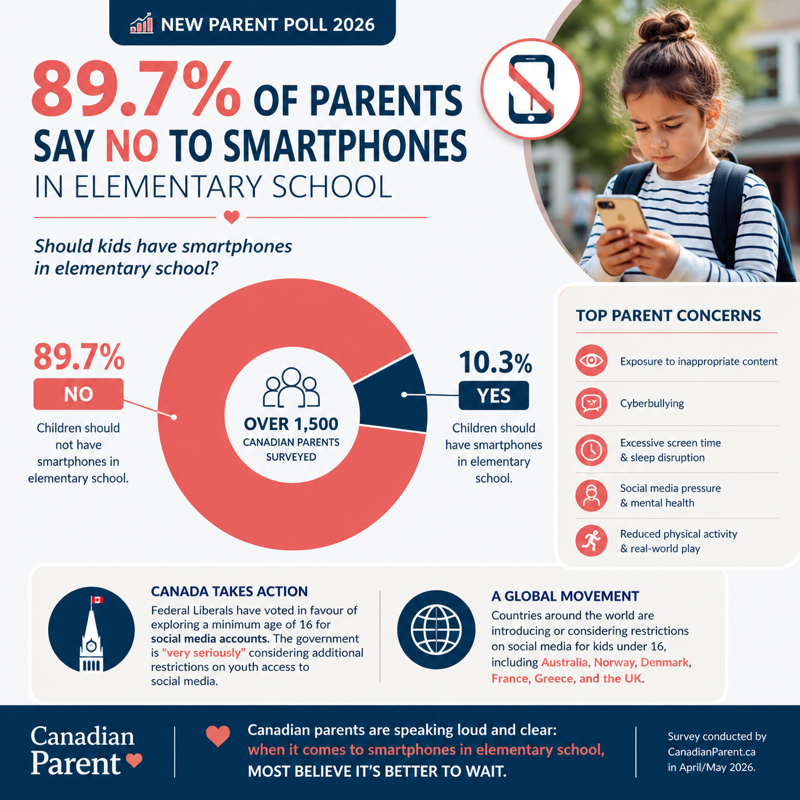
Poll Results
Polling reveals similarly strong concerns about TikTok with more than 90% opposing access for children under 13 or supporting only highly restricted use.
Parents are not necessarily rejecting technology or saying children should never use connected devices. The concern is about giving an elementary-aged child constant, independent access.”
WINDSOR, ONTARIO, CANADA, July 31, 2026 /EINPresswire.com/ -- A new CanadianParent.ca poll has found overwhelming opposition to giving children smartphones during their elementary school years, highlighting growing concerns about digital independence, social media exposure and online safety.— Cory Arsic, Founder of CanadianParent.ca
CanadianParent.ca asked its community a direct question: “Should kids have smartphones in elementary school?”
Among more than 1,500 participating parents, 89.7% answered no. Just 10.3% believed children should have smartphones while attending elementary school.
The results point to a striking degree of agreement on a parenting issue that can become increasingly difficult as children see classmates receiving their first phones and families consider how to stay connected throughout the day.
“Parents are not necessarily rejecting technology or saying children should never use connected devices,” said Cory Arsic, founder of CanadianParent.ca and a father of two. “The concern is about giving an elementary-aged child constant, independent access to social media, messaging, video platforms and the wider internet before they are ready to manage it.”
Smartphones can provide practical benefits, particularly when children travel independently, participate in after-school activities or move between different caregivers. However, they also introduce potential challenges involving excessive screen time, inappropriate content, cyberbullying, disrupted sleep, social pressure and online privacy.
For many families, the decision is no longer simply about whether a child should eventually receive a phone. It is about determining when the child has developed the maturity and digital literacy required to use one responsibly.
“Every family’s circumstances are different, and there are legitimate safety and communication reasons for giving some children access to a phone,” Arsic said. “Still, the size of this majority suggests that many parents want to delay full smartphone ownership and introduce digital independence more gradually.”
Parents Are Also Drawing a Firm Line on TikTok:
The smartphone findings are consistent with a separate CanadianParent.ca poll examining whether children under 13 should be permitted to use TikTok.
That poll received 1,416 responses. Of those participants, 86.1% said children under 13 should not use the platform because it is too addictive or inappropriate. When respondents who supported only highly restricted access were included, opposition or strong concern reached 90.5%.
Only 5.4% supported TikTok use with parental supervision, while 4.4% supported limited use.
Together, the polls suggest that parents distinguish between children occasionally using technology under adult supervision and giving them unrestricted access through a personal device or social media account.
“Parents understand that technology will be part of their children’s lives,” Arsic added. “What they are questioning is how early that access should begin, how much independence children should have and whether platforms designed to hold a user’s attention are appropriate for younger age groups.”
A Growing Conversation for Families and Schools:
The findings arrive as families and schools continue navigating questions about phones in classrooms, children’s social media use and the role digital devices should play during the elementary years.
Peer pressure can make these decisions particularly challenging. A child may request a smartphone because friends already have one, while parents may worry that delaying access could leave their child socially excluded. At the same time, early smartphone ownership can expose children to online environments they may not yet be equipped to navigate.
CanadianParent.ca encourages families to consider a child’s maturity, communication needs and ability to follow household rules rather than treating a particular age as universally appropriate.
The organization also recommends ongoing conversations about privacy, online behaviour, screen-time expectations and what children should do if they encounter upsetting content or contact from someone they do not know.
The complete smartphone poll findings are available in the CanadianParent.ca report, “New Parent Poll 2026: Nearly 90% Say Kids Should Not Have Smartphones in Elementary School.”
Poll Methodology:
CanadianParent.ca conducted an online reader poll asking: “Should kids have smartphones in elementary school?”
More than 1,500 members of the CanadianParent.ca community participated. At the time the results were published, 89.7% answered no and 10.3% answered yes.
The related TikTok poll asked: “Should kids under 13 be allowed to use TikTok?” A total of 1,416 CanadianParent.ca readers participated.
The polls reflect the opinions of participating readers and are intended to offer insight into the attitudes of CanadianParent.ca’s community. They are not nationally representative surveys of all Canadian parents.
---------------------------------------------------
About CanadianParent.ca: CanadianParent.ca is a Canadian parenting resource and community providing practical information for new, expecting and experienced parents. Its original polls and research explore the everyday decisions, pressures and concerns affecting Canadian families, including technology, childcare, family finances, child development and online safety.
Cory Arsic
Canadian Parent
info@canadianparent.ca
Legal Disclaimer:
EIN Presswire provides this news content "as is" without warranty of any kind. We do not accept any responsibility or liability for the accuracy, content, images, videos, licenses, completeness, legality, or reliability of the information contained in this article. If you have any complaints or copyright issues related to this article, kindly contact the author above.
